

In short: 7 days and 6 nights in Iceland, with 5 stops: Reykjavik → Icelands Geysers → Gullfoss → Eyjafjallajökull → Fagradalsfjall. Best time to go: June–August.
Iceland makes geology visible: boiling water shooting into the air, a river falling into a canyon, a glacier sitting on a volcano, and lava fields only a few years old. This one-week loop from Reykjavik covers the famous Golden Circle and adds the south coast and the Reykjanes Peninsula. Every stop is an Uncommon card.
When to go
June to August brings midnight sun, open highland roads and the mildest weather. It’s the best window for this route, and the Fagradalsfjall hike is only sensible in these months.
- May and September are quieter and cheaper, with a chance of early northern lights in September.
- November to February means short days and icy roads. It’s beautiful, but plan a guided winter version instead of a self-drive.
The route, stop by stop
1 · Reykjavik — 2 nights
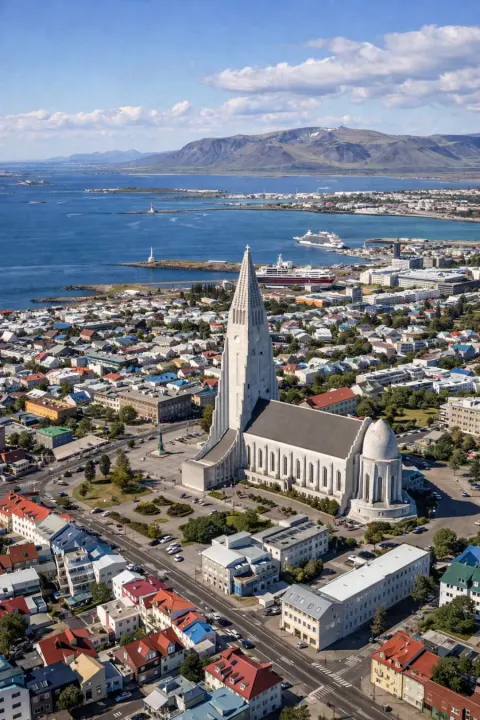
The world’s northernmost capital is small, colourful and easy to walk. See Hallgrímskirkja and the Harpa concert hall, eat at the old harbour, and get used to the light. In summer, sunset is barely a pause. Pick up your rental car on day two.
2 · Icelands Geysers — day stop
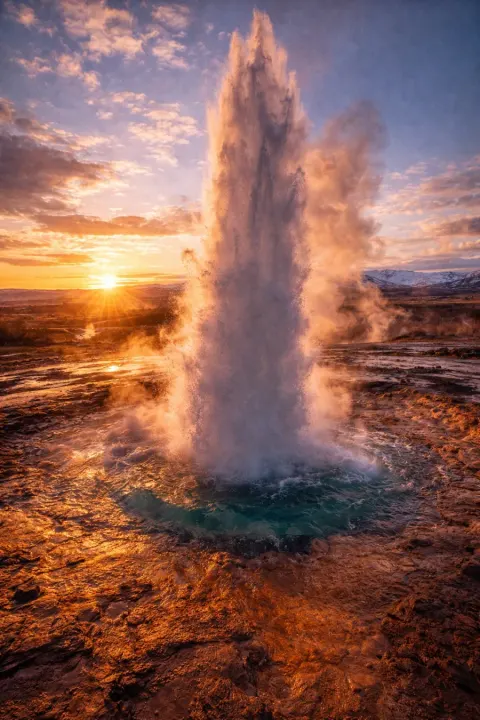
The Haukadalur valley gave every geyser its name. The Great Geysir is mostly quiet now, but Strokkur erupts every few minutes and sends boiling water 20 metres up. Stand upwind.
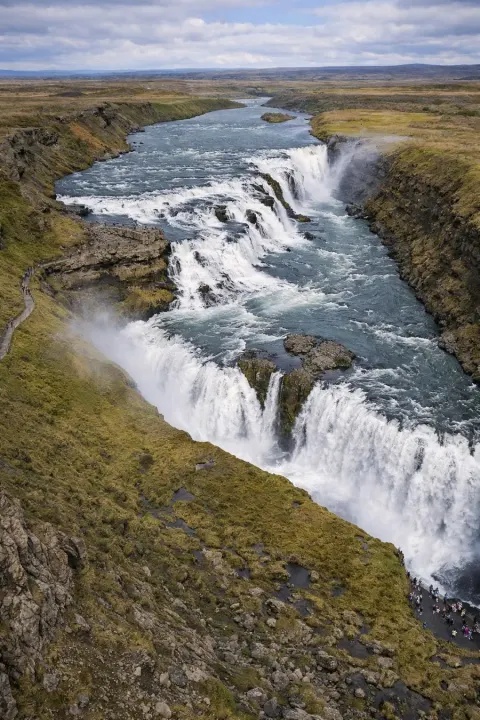
3 · Gullfoss — 1 night
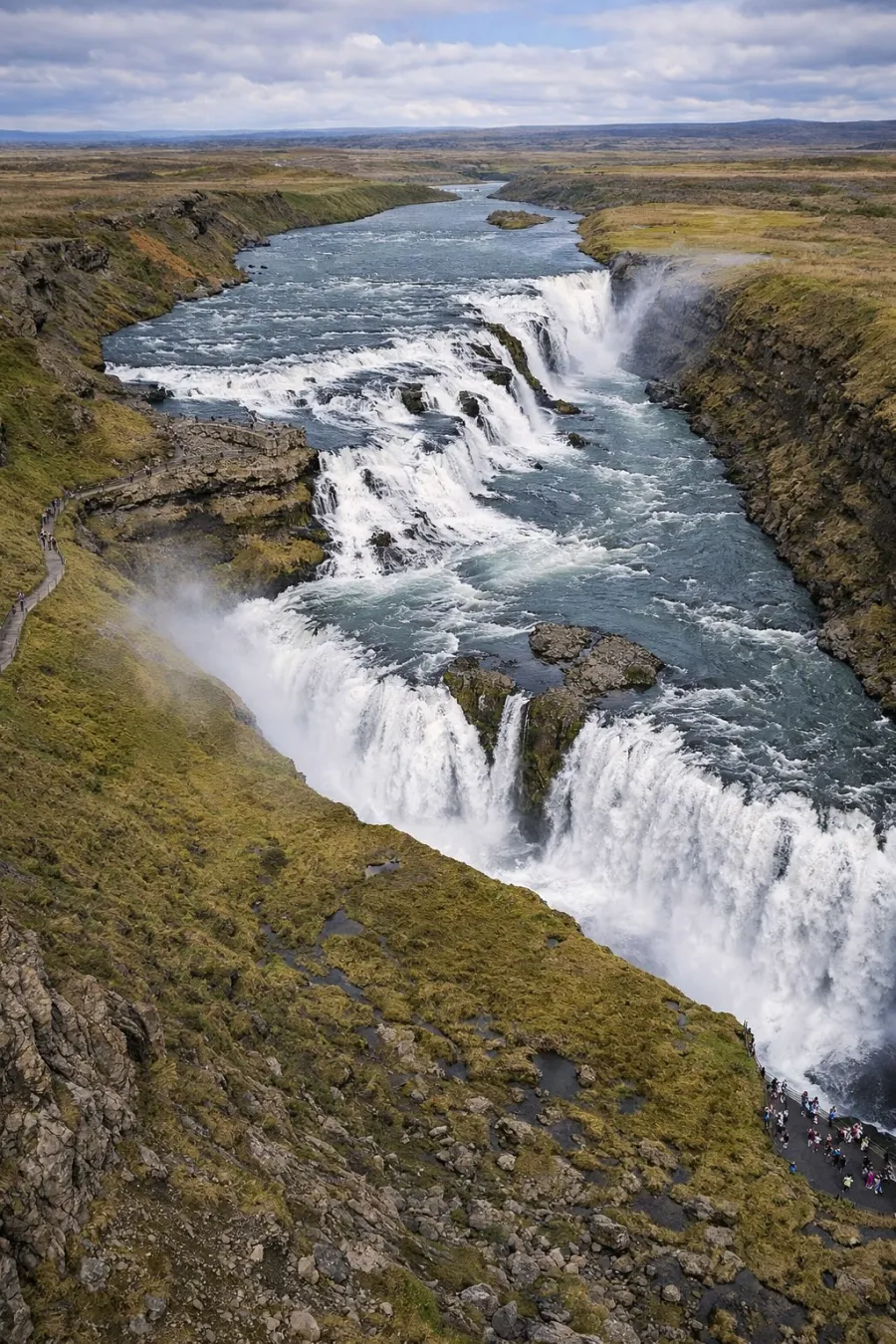
Ten minutes further on, the Hvítá river drops in two steps into a deep canyon, and on sunny days the spray throws rainbows. Stay nearby so you can see it again in the soft evening light, when the tour buses have gone.
Tip: take the lower path to the edge for the full roar, and bring a rain jacket.
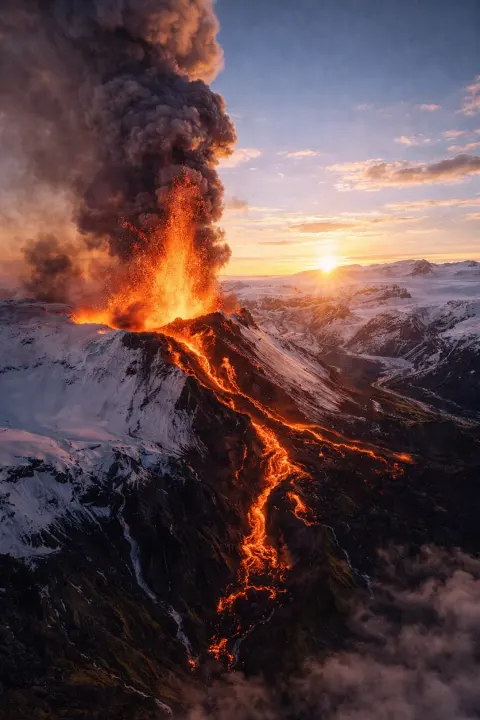
4 · Eyjafjallajökull — 2 nights
The volcano that grounded Europe’s flights in 2010 sits under an ice cap above the south coast. Use it as a base for Seljalandsfoss (you can walk behind it) and Skógafoss, the black-sand beach near Vík, and a guided walk on the Sólheimajökull glacier.
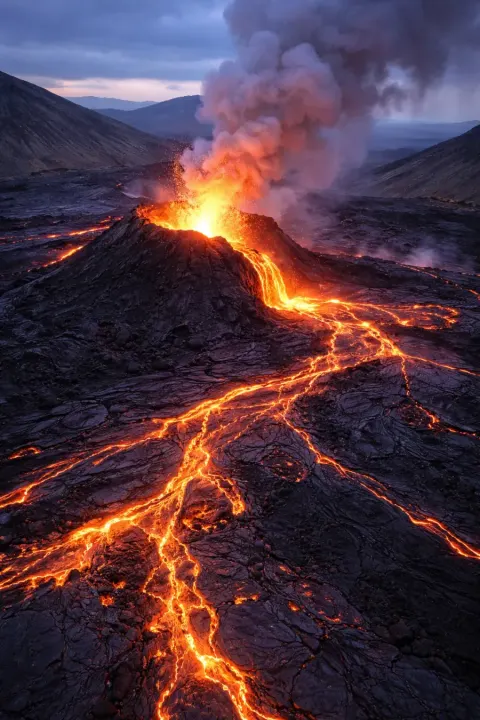
5 · Fagradalsfjall — 1 night
On the Reykjanes Peninsula, this volcanic system woke up in 2021 after about 6,000 years of sleep and has erupted again several times since. Walk across new lava fields that are still steaming in places, then soak at a geothermal lagoon before your flight from Keflavík, which is only 30 minutes away.
Tip: check safetravel.is and the Icelandic Met Office before you go. Access depends on volcanic activity.
Practical tips
- Car: a normal 2WD is fine on this route in summer. Don’t drive on F-roads without a 4×4.
- Weather: it can change within the hour. Pack layers and waterproofs even in July.
- Booking: summer accommodation outside Reykjavik is limited, so book early.
- Respect nature: stay on marked paths. Moss takes decades to recover.